
How to Choose the Best Catering Service for Your Event
Learn how to choose event catering through menu review, food checks, staff review, pricing, logistics, and contract terms for a strong guest meal.
23 Mar 2026
A catering company’s past work tells a richer story than any sales line ever could, because busy service hours, venue access rules, guest expectations, and timing pressure all test a team in ways a brochure never can. A host gains useful insight by asking where the team has worked, how large those guest counts were, and what kind of events filled the company’s recent calendar.
Experience matters in practical ways. A team that has handled a wedding dinner understands pacing between courses. A team that has worked at a corporate reception understands guest flow around speeches and networking. A team that has managed private celebrations often reads the room well and adjusts service tone to suit the host’s crowd. A short conversation with the catering manager often reveals all of this in a few minutes.

Review Catering Menu Options
A menu carries the event’s personality in a direct and memorable form, so menu review deserves careful time because guests often recall the meal long after the room décor, table plan, and welcome drinks fade from memory. A broad menu gives the host room to shape the meal around the guest list, the event hour, and the overall purpose.
One host may need a buffet dinner for a large family crowd. Another may need plated service for a board dinner. A third may need canapés and light bites for a gallery launch. Good catering companies present menus that fit these different needs. Ask how often menus change. Ask which dishes travel well. Ask how the kitchen handles dietary requests such as vegetarian meals, dairy-free plates, or child-friendly dishes. Menu variety matters, yet menu discipline matters too. Too many weak dishes weaken the proposal.

Compare Catering Packages and Pricing
Package review works best when the host reads several offers side by side and checks what is included in the quoted fee, because one lower number may hide rental fees, staffing charges, or transport costs that rise later and change the full picture. Pricing gains meaning only when it appears beside the service scope.
Some packages cover food and staff. Some include tableware, setup items, beverage stations, or service managers. A wise host asks for a full written outline. Ask how many staff members will join the event. Ask whether the fee covers tables, chairs, or linens. Ask whether the kitchen team brings its own equipment. A fuller quote often carries stronger value, even when the first number looks higher. Event budgets reward complete information.
Check Food Quality and Presentation
Food quality reveals itself in taste, temperature, portion balance, and plate appearance, and a proper tasting session usually gives the host the clearest sense of how a company performs under real meal conditions rather than polished sales language. A tasting deserves full attention. Take notes. Ask for the same dishes listed in the proposed event menu.
Presentation also matters because guests read a plate before the first bite. A careful kitchen sends out food that looks thoughtful and appetizing. A rushed kitchen often shows its habits on the plate. Watch how sauces sit, how proteins rest, and how side items support the main item. Taste tells one part. Visual appeal tells another part. The two should work together.

Evaluate Catering Staff and Service
Service staff shapes the guest experience in a very human way because a well-run floor team can carry a room with grace, steady pace, and quiet awareness, while a weak team can interrupt a strong meal with delay, confusion, or uneven attention. Staff quality deserves the same level of scrutiny as food quality.
Ask who leads the service team. Ask how many servers will attend. Ask whether the same captain stays through setup, meal service, and cleanup. A manager who answers clearly often runs a stronger team. Courtesy matters. Timing matters. Floor awareness matters. Great service often feels natural to guests because the team reads the room and moves with calm purpose.
Read Catering Reviews and Testimonials
Reviews give the host a view into past client experience, and repeated praise around timing, food standard, or staff behavior often points toward habits that will likely appear again on your event day. Read recent reviews first. Read long reviews after that. Short praise helps. Detailed praise helps more.
Testimonials carry weight when they mention situations close to your own event. A wedding host may value comments from other wedding clients. A business client may care more about conference lunches or executive dinners. Patterns matter. A series of comments around late arrival, weak food temperature, or poor communication gives useful insight. A series of comments around steady service and guest praise gives useful reassurance.
Confirm Catering Logistics and Setup
Logistics decide whether a catering plan lives comfortably inside the venue or struggles from the start, so the host should ask early about kitchen access, load-in hours, electrical needs, refrigeration, waste handling, and on-site preparation requirements. Great meals still need a workable physical route.
Venue knowledge also helps a lot. A team that already knows the venue can often plan setup with better timing and fewer surprises. Ask if the company has served there before. Ask whether a site visit forms part of the booking process. Ask how the team handles transport delays or venue access windows. Event success often rests on these practical matters more than people expect.
Discuss Contracts and Booking Terms
A written agreement holds the booking together because it sets the guest count deadline, the menu, the staff count, the payment plan, and the cancellation terms in one place where both sides can read the same facts. A clear contract creates steadier expectations for the host and the caterer alike.
Read the contract slowly. Check the deposit amount. Check the final balance date. Check the event hour listed in the agreement. Ask about overtime rates. Ask how menu changes are handled after the tasting. Ask who carries responsibility for rental damage if glassware or plates break during the event. These terms deserve calm review before any payment goes out.
Confirm Catering Setup and Cleanup Services
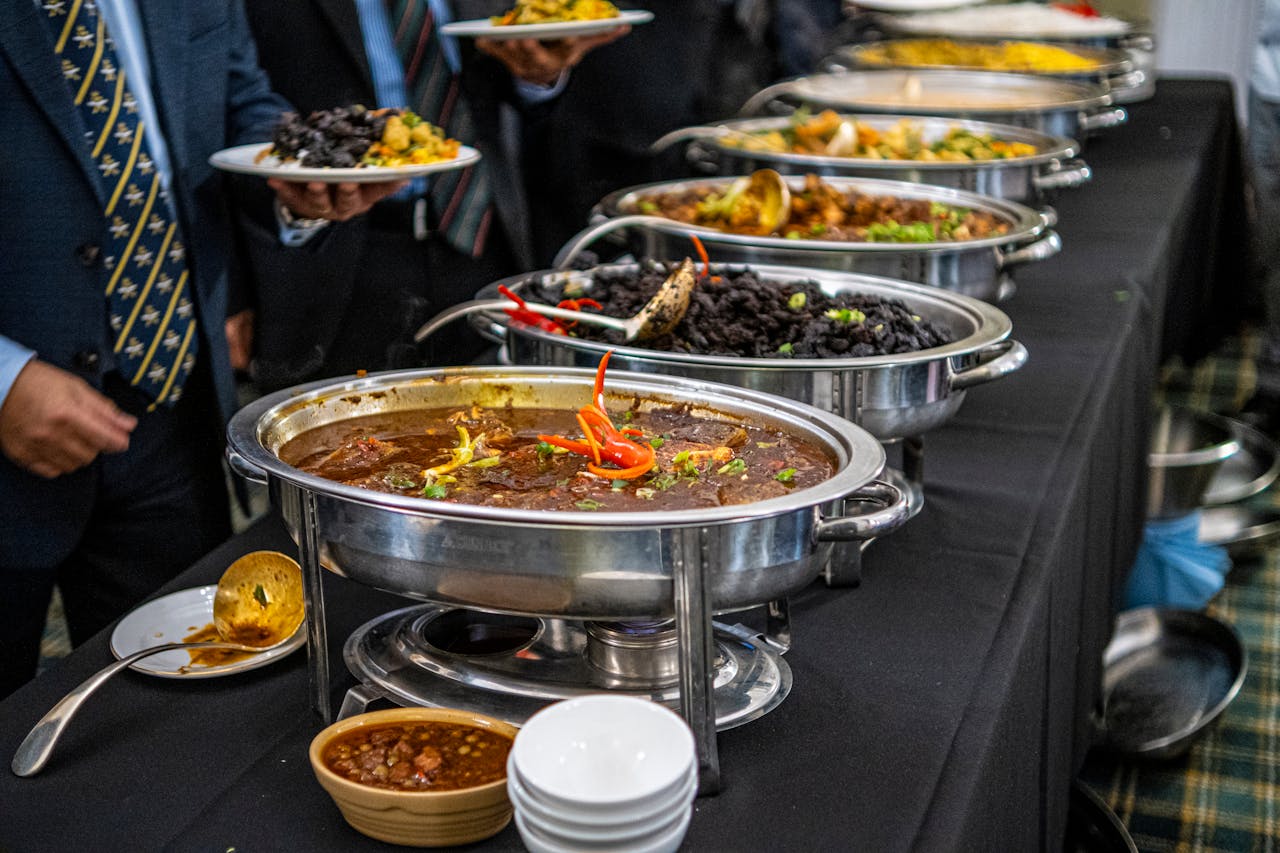
Set up and cleanup often shape the host’s workload more than the food itself, because the event begins long before guests arrive and continues after the last table clears, so the host should learn exactly which tasks the catering company handles and which tasks remain elsewhere. A complete answer saves stress later.
Some companies handle table setup, buffet layout, plate clearing, kitchen breakdown, and waste removal. Some leave part of that work to the venue team. Others split the duties. Ask for a written task list. Ask who packs leftovers. Ask who removes service items. Ask who leaves the kitchen in a venue-ready condition. The strongest caterers treat the full service cycle with real care.
Tips for Choosing the Best Catering Service
Picking a caterer is a big deal, so don't rush it! Really check them out, ask them stuff, and try the food. It matters because the food affects your guests, the event's vibe, and how people see you, so it needs careful thought. Take time to compare menus, pricing, staff, logistics, and contract terms before you decide.
Someone’s Plan helps hosts review service providers in one place, compare offers, and move toward booking with stronger information in hand. A host who asks the right questions often gets a far stronger event meal. Food leaves a memory. Good selection shapes that memory well.
 Instagram
 Youtube
 Facebook
 Linkedin
 Twitter